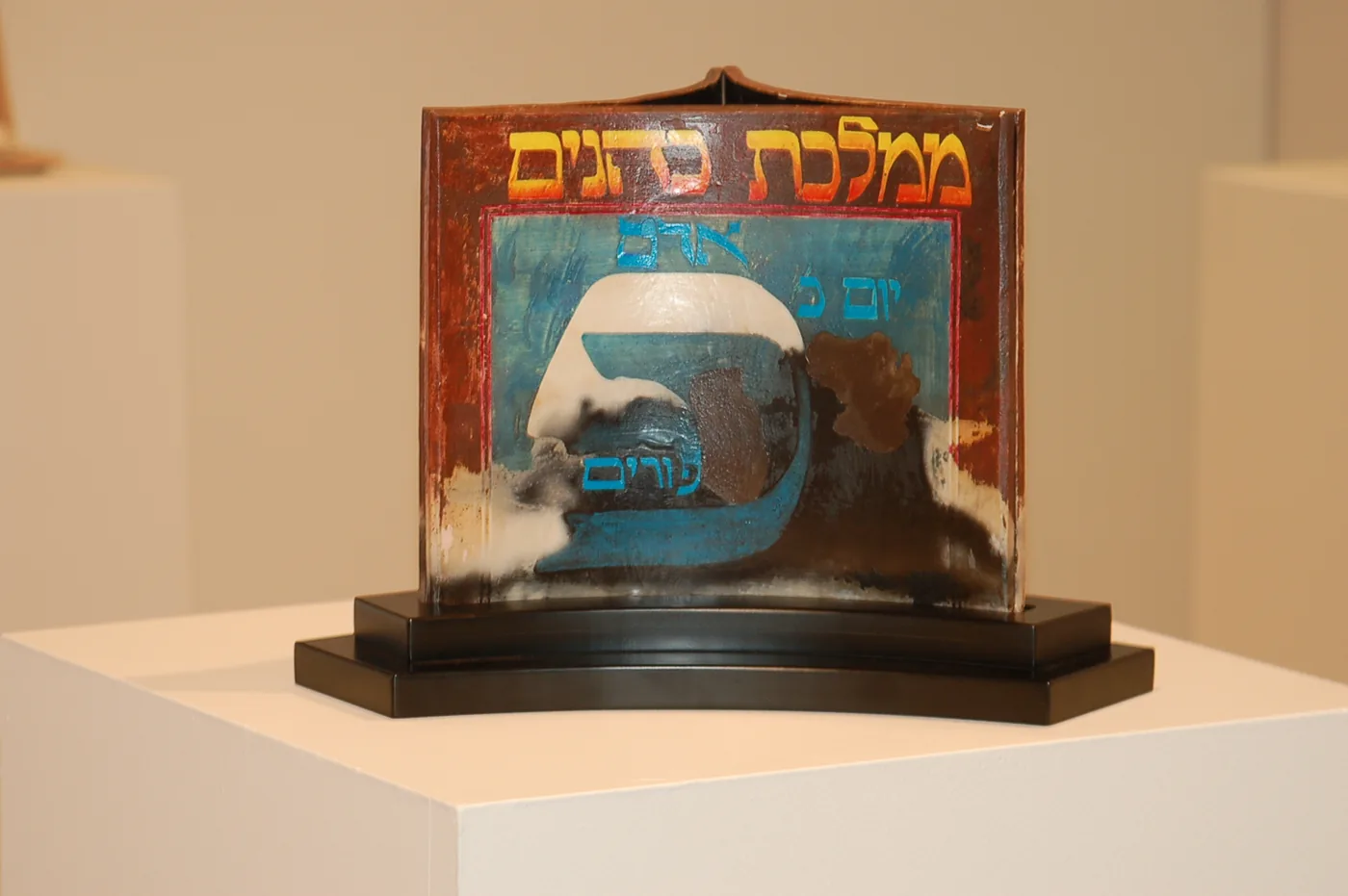
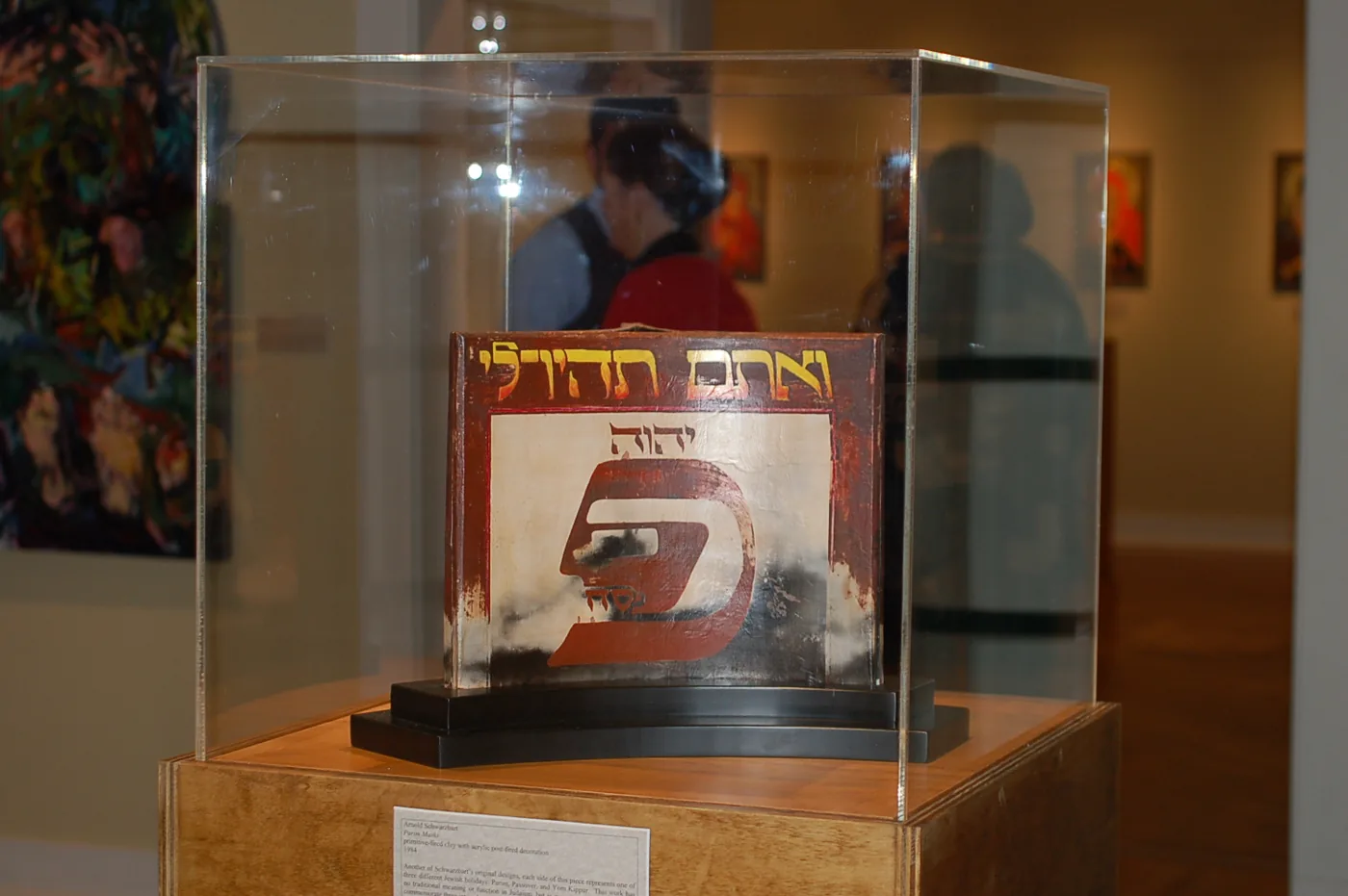
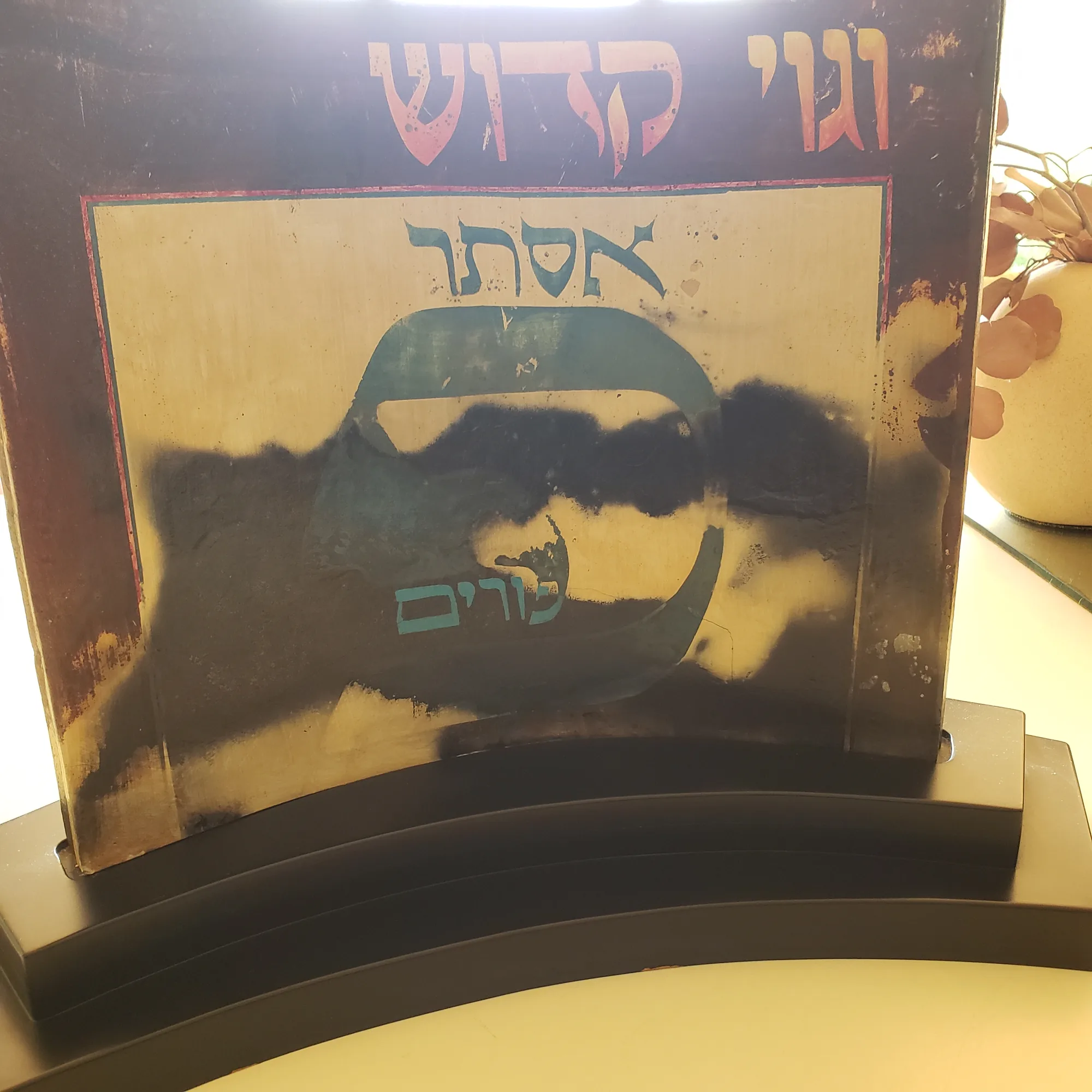
For a show of masks, Purim is a natural response and the seed of an idea. The Purim story, the redemption of the Jews of Persia, is unique in that the name of God does not appear in the Book of Esther. Pesach, the redemption of the Jews from Egypt, is unique in that the Haggadah does not mention Moses. The third face represents the personal redemption of every Jew on Yom Kippur. The first two holidays begin with the letter peh, and according to a traditional pun Yom Kippurim may be read as three words, Yom Ki Purim, "a day like Purim," when our heavenly lot is cast. The large face-like image in the center of each tile is the letter peh, the first letter of the Hebrew word for redemption as well as of the three holidays. In the mouth of each large peh appears one of the holidays. It is traditional for letters in the Torah to have crowns: the crown of the peh of Purim is Esther; the crown of the peh of Pesach is the name of God; the crown of Yom Kippur, when he returns to God, is man. The three crowns, then, are God, woman, and man. The text that runs around the top of all three tiles reads: "And you shall be unto Me a kingdom of priests, and a holy nation." To me, this verse is central to the reason for our continued redemption.
Arnold Schwarzbart
The text
ואתם תהיו לי ממלכת כהנים וגוי קדוש
And you shall be to Me a kingdom of priests and a holy nation.
Exodus 19:6, across the tops of the three faces
פורים, אסתר
Purim, Esther.
The Purim face; the Name of God does not appear in the Book of Esther
 Studio of Arnold Schwarzbart
Arnold Schwarzbart ז״ל · 1942 – 2015 · Knoxville, Tennessee
Studio of Arnold Schwarzbart
Arnold Schwarzbart ז״ל · 1942 – 2015 · Knoxville, Tennessee